

[No.1] SPACEBLOCK: A Tiny Computer for Making Things, Full of Possibilities!
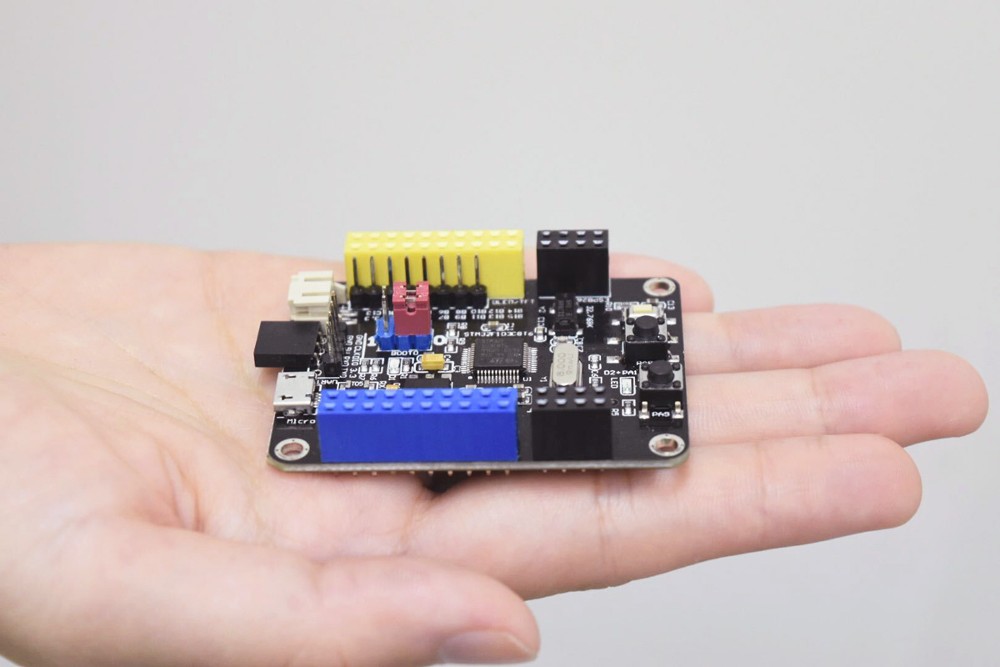
Hi there! This is SPACEBLOCK!! SPACEBLOCK is a computer born in Tokushima, Japan, made as a tool that lets anyone, from kids to adults, enjoy real hands-on making. You might be surprised and think, "Wait, this is a computer?" But computers come in all kinds of shapes, and they are hard at work all around us.
Computers Are All Around Us!
Let's start right away. Look around you and find out what kinds of computers there are. Computers, tablets, and smartphones are all computers. Game consoles, which so many kids love, are computers too. They all have a display (screen) and you control them with your hands.
Some computers have no screen and look completely different. Washing machines, microwaves, rice cookers, TVs, vacuum cleaners, and other appliances we use every day have small computers inside. Out in town, vending machines, ticket gates, automatic doors, supermarket checkouts, and traffic lights all run on computers. Computers are also part of what makes cars, airplanes, and trains move.
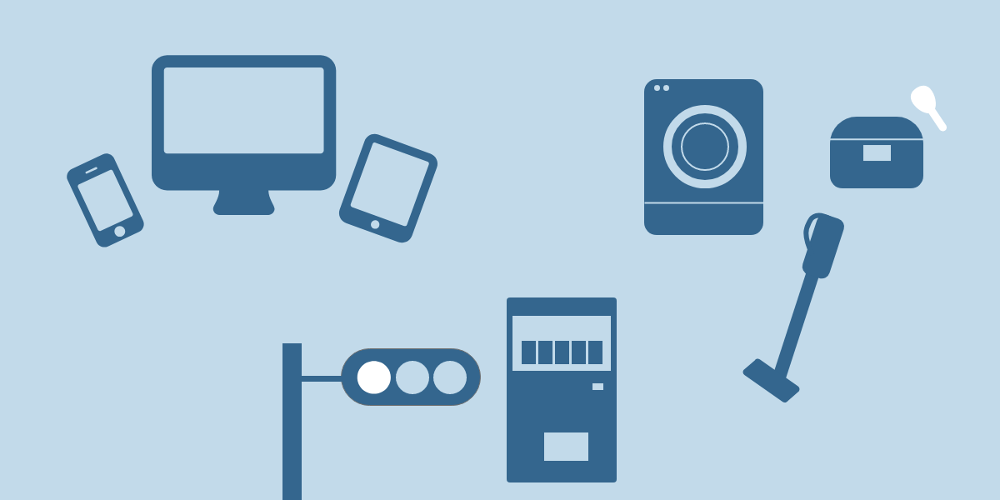
When you look around, we are surrounded by computers! There is hardly a day we can get through without using one.
Computers Are Great at Calculating!
Even though there are computers all around us, most of them look and work nothing like a laptop or a smartphone. So what exactly is a computer?
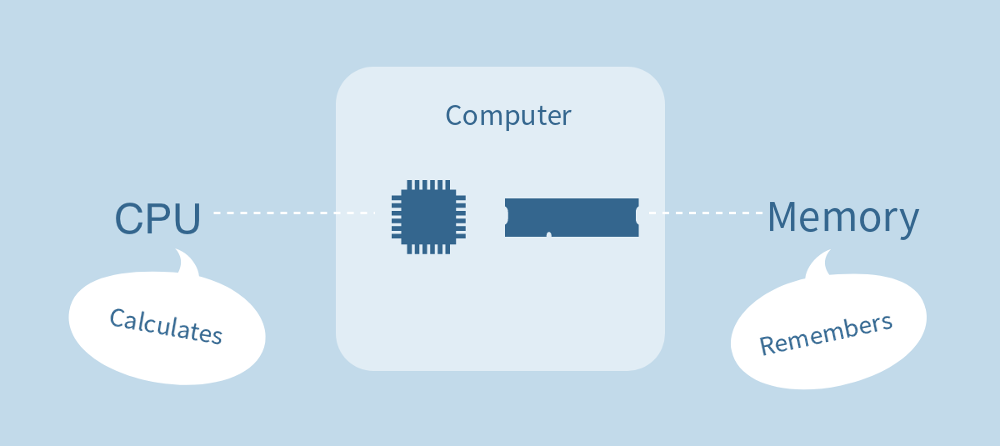
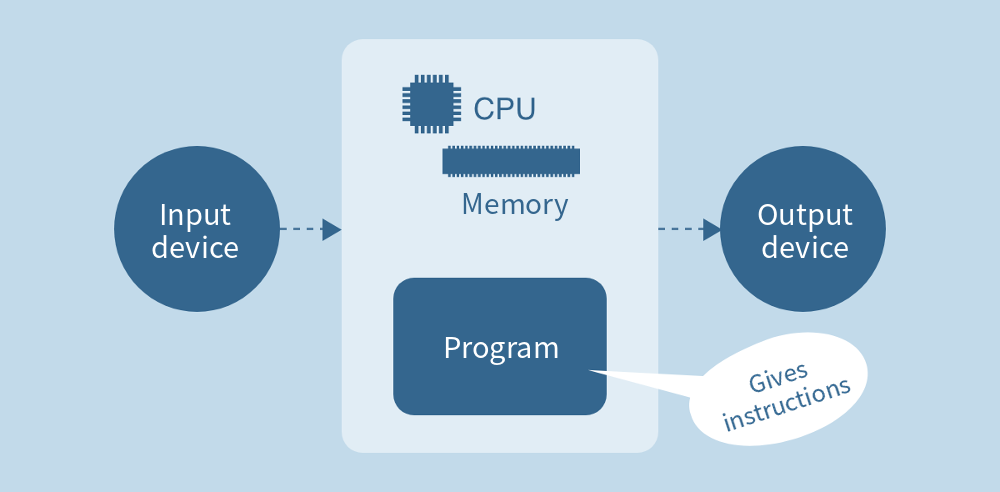
A computer is a machine that can carry out the instructions it is given, exactly. Computers come in many shapes, but every computer has a "CPU" for calculating and "memory" for remembering, so it can do calculations just as it is told. The CPU is a brain that calculates at amazing speed, and memory is where the results of calculations and the instructions are stored.
Since a computer's job is calculating, of course it is good at handling things you can express as numbers, like time or temperature. But if all a computer does is calculate, how can it handle so many kinds of information, like text, photos, and music? The secret is that all information a computer handles, whether it is text, pictures, or sound, is turned into numbers by set rules, so it can be processed by calculating. Information that has been turned into numbers like this is called "digital information."
For example, videos and 3D graphics turn into a huge amount of digital information. But because computers calculate super fast, you can enjoy movies and games.
Input Devices and Output Devices: How Information Goes In and Out of a Computer
A computer is a machine that calculates digital information, but it can't calculate anything unless we give it information about what to calculate. The thing that passes that information to the computer is called an "input device".
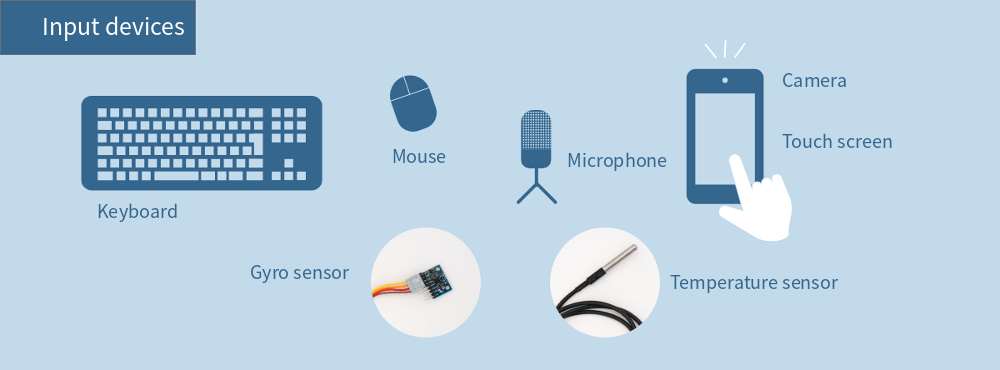
On computers and smartphones, the keyboard and touch screen that people use are input devices. On a game console, the controller is an input device. Microphones and cameras are input devices too. Voice recognition and face recognition are becoming common these days: a microphone passes sound information to the computer, and a camera passes the images it takes.
Not every input device is something a person operates. For example, a part that measures water temperature and passes it to the computer is an input device. There are also parts that measure humidity, brightness, or how much something is tilted, and these are input devices as well.
The results a computer calculates from the input are only useful once they are shown to people or used to move something. The thing that puts those results to use is called an "output device".
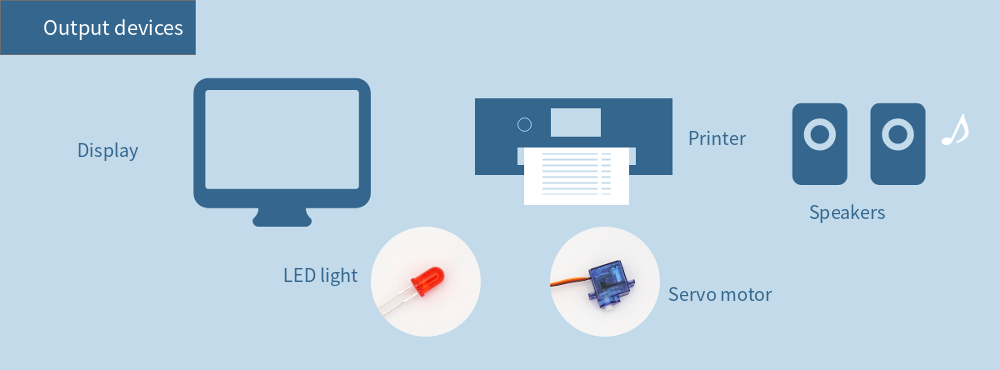
On computers and smartphones, the display is an output device. It turns the results into pictures that people can see. In the same way, printers that print on paper and speakers that play sound are output devices.
Output devices aren't always used directly by people either. Motors that change their speed based on the computer's results, and LED lights that show whether an appliance is running, are output devices too.
Computers Can't Work Without Programs!
There is one more thing a computer can't work without: a program. Remember how we said a computer "carries out the instructions it is given, exactly"? Those instructions are the program. When the program changes, a computer can do something completely different.
For example, the same smartphone can do totally different things when you switch apps, and the same game console can play totally different games when you change the game. That's because you are swapping the program.
SPACEBLOCK Is a Computer!
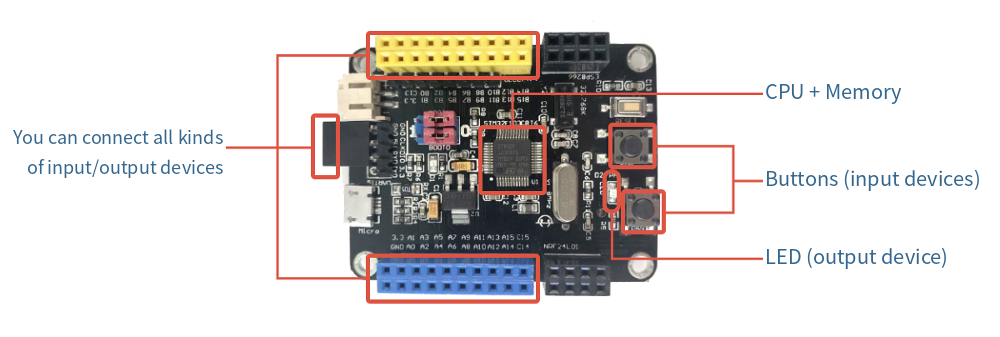
Still, it looks a bit like a machine part, and it has only a few input and output devices. That's because SPACEBLOCK is a computer made to be a "tool" for making things. It packs in only what is really needed, so you can connect the input and output devices you want to use.
For example, one output device that is fairly easy to use is this full-color LED panel. It has 8 LEDs down and 8 across, 64 LEDs in all, and it can show colorful letters and pictures. By the way, Tokushima, where SPACEBLOCK was born, is famous as one of Japan's leading regions for developing and making LEDs.
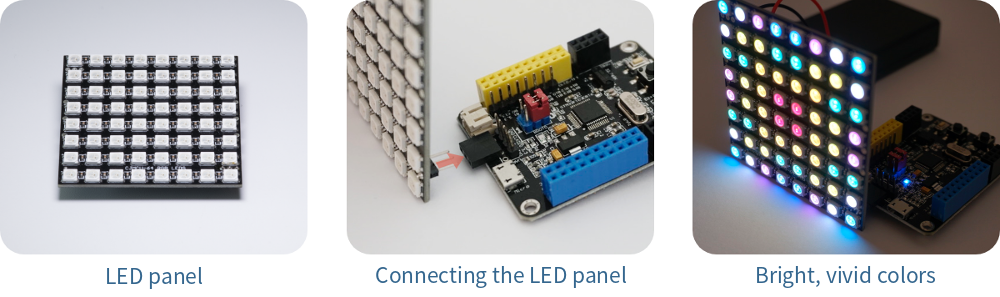
You can also connect a speaker to play sounds, or a temperature sensor to make something happen when it gets hot. The possibilities are endless. More and more devices that connect to SPACEBLOCK are on the way.
But will SPACEBLOCK start working as soon as you connect power and the input and output devices you like? Not quite. One important thing is missing. That's right: the program. SPACEBLOCK is a computer, so it can't do anything without a program telling it what to do.
So where is the program, you ask...? It isn't anywhere yet. You are the one who makes it!!
What you make with SPACEBLOCK as your tool is up to you. With a creative mind and programming skills, your ideas can grow and grow. Learn some programming skills and have fun making digital creations!!
Next time, our theme is "What is programming?" and you'll take your first step toward becoming a SPACEBLOCK programmer. Stay tuned!
